Overview
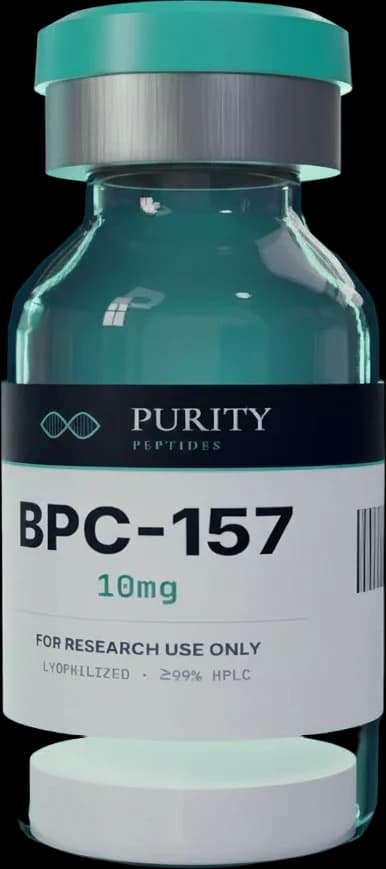
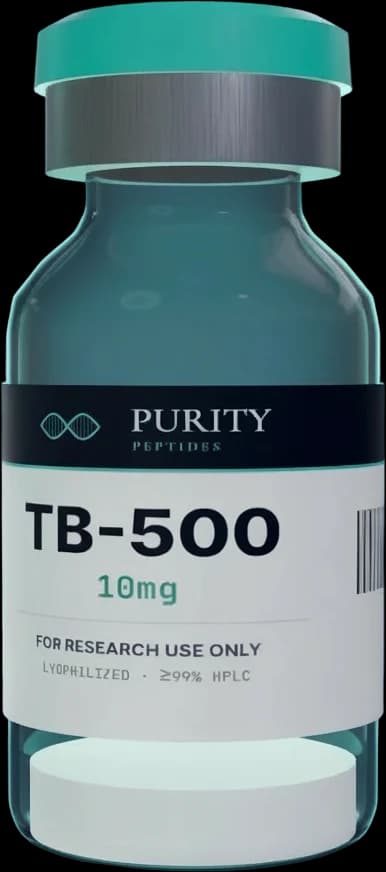
The Wolverine blend combines two peptides that are among the most frequently studied in experimental tissue-repair research: BPC-157, a 15-residue fragment of a gastric protein, and TB-500, a synthetic peptide based on the actin-binding region of thymosin beta-4. Supplying them together in a single lyophilized vial is designed for convenience in experiments that examine both peptides at a fixed ratio.
Each component has its own in vitro studies and animal models.">preclinical literature. BPC-157 has been examined in rodent tendon, ligament, muscle and gastrointestinal injury models, while thymosin beta-4 and related fragments have been studied in wound, corneal and cardiac repair. No published research has evaluated the two together, and neither is an approved medicine. Both appear on the WADA Prohibited List. The blend is supplied strictly as a research material, with each peptide verified individually before blending.
Mechanism studied
- BPC-157 + TB-500
- Angiogenesis & actin dynamics
- Cell migration
- Tissue remodelling
The two components are thought to act through complementary routes. BPC-157 has been associated with VEGFR2 upregulation, nitric oxide signalling and FAK–paxillin activation in fibroblasts, processes tied to new vessel formation and cell outgrowth. TB-500 binds monomeric actin through its LKKTETQ motif, regulating cytoskeletal dynamics and promoting the migration of endothelial and repair cells. Any interaction between these pathways in a combined preparation remains hypothetical and has not been examined in controlled studies.
Blend components
Research highlights
- 01Combines BPC-157 and the thymosin beta-4 fragment TB-500
- 02Components address angiogenic and actin-cytoskeleton pathways
- 03No published studies on the combination itself
- 04Both components are on the WADA Prohibited List
- 05Each peptide verified before blending
Research areas
- Tendon & muscle injury models
- Angiogenesis research
- Cell migration assays
- Combined repair-pathway studies
Evidence & regulatory status
Overall status: Not approved — research
Key references
- [1]Sikiric et al., 2018 — Curr Pharm Des (review)
- [2]Goldstein et al., 2012 — Expert Opin Biol Ther
- [3]WADA — Prohibited List of Substances and Methods
FAQ
The two peptides are often investigated side by side in tissue-repair research because they are associated with different pathways. A pre-blended vial supports experiments that require a fixed ratio, although researchers should include single-peptide controls since the combination itself has not been formally studied.
Lyophilized the Wolverine blend is normally kept sealed at −20 °C, protected from light and moisture. Once reconstituted for laboratory work, aliquots are held at 2–8 °C for short-term use or frozen, avoiding repeated freeze–thaw. Follow the lot-specific guidance on the certificate of analysis.
Every lot of the Wolverine blend ships with a certificate of analysis reporting HPLC purity, mass-spectrometry identity against the expected molecular weight, appearance and lot number. Match the COA lot to the vial label and keep it with your experimental records. Both components are identified individually.
Last updated October 2026 · Reviewed by the Purity Peptides research team · Information is a summary of published literature and is not a recommendation for any use.