Overview
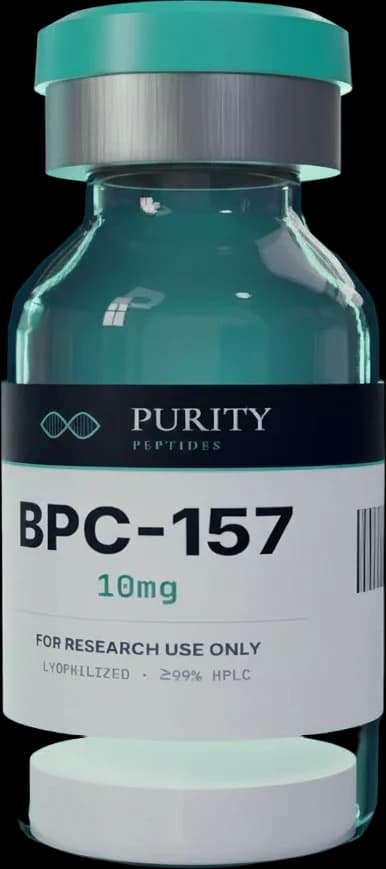
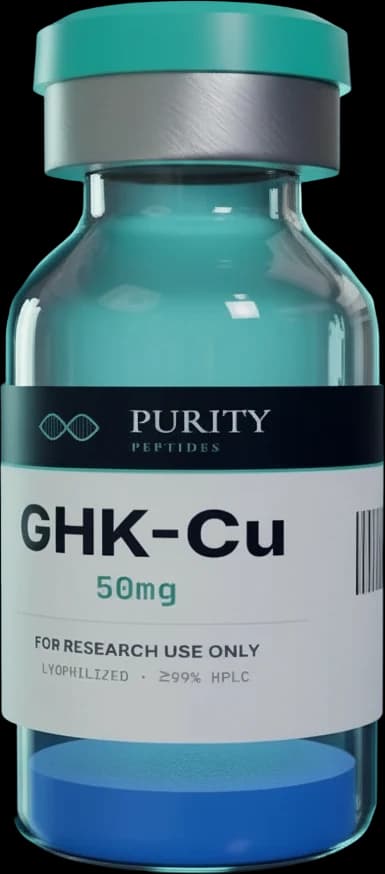
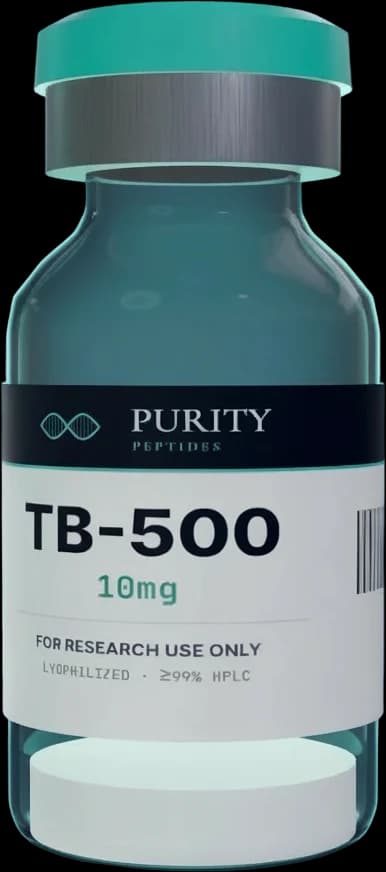
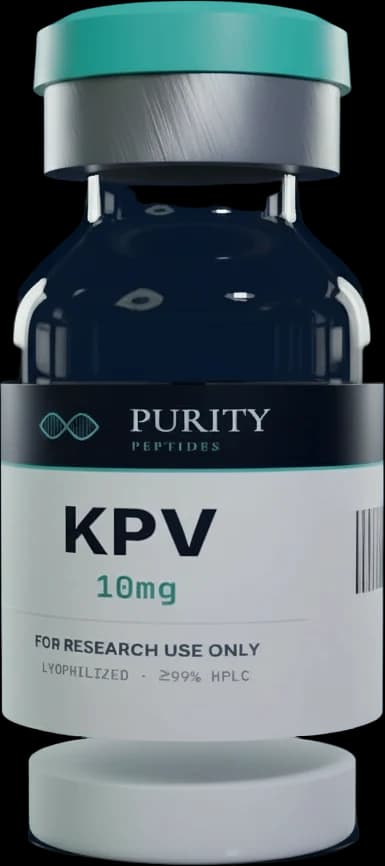
KLOW is a pre-formulated research blend containing four peptides that are each studied for different aspects of tissue repair: the copper complex GHK-Cu, the anti-inflammatory tripeptide KPV, the gastric-derived pentadecapeptide BPC-157 and the thymosin beta-4-related fragment TB-500. Combining them in one lyophilized vial is intended to simplify experiments that examine several repair-related pathways in parallel.
It is important to note that the blend itself has not been the subject of published studies. The rationale draws entirely on separate literature for each component — fibroblast and matrix research for GHK-Cu, colitis models for KPV, and rodent injury models for BPC-157 and TB-500. None of the components is an approved medicine, and two appear on the WADA Prohibited List. KLOW is supplied strictly for in-vitro and animal research, with each component verified before blending.
Mechanism studied
- KLOW blend
- Matrix, actin & NF-κB pathways
- Repair signalling
- Tissue remodelling models
Each component targets a distinct process. GHK-Cu delivers copper and is associated with collagen and extracellular-matrix synthesis in fibroblasts. KPV, the C-terminal tripeptide of α-MSH, is taken up by intestinal and immune cells and has been reported to dampen NF-κB-driven inflammatory signalling. BPC-157 has been linked to VEGFR2 and nitric oxide pathways involved in angiogenesis, and TB-500 to actin sequestration and cell migration. Whether these activities interact additively in a combined preparation has not been formally investigated.
Blend components
Research highlights
- 01Four-component blend: GHK-Cu, KPV, BPC-157 and TB-500
- 02No published studies on the combination itself
- 03Component rationale drawn from matrix, inflammation and injury-model research
- 04BPC-157 and TB-500 are on the WADA Prohibited List
- 05Each component identity-verified before blending
Research areas
- Combined repair-pathway models
- Dermal matrix research
- Inflammation signalling studies
- Cell migration assays
Evidence & regulatory status
Overall status: Not approved — research
Key references
- [1]Pickart & Margolina, 2018 — Int J Mol Sci 19(7):1987
- [2]Dalmasso et al., 2008 — Gastroenterology 134(1):166–178
- [3]Sikiric et al., 2018 — Curr Pharm Des (review)
- [4]Goldstein et al., 2012 — Expert Opin Biol Ther
- [5]WADA — Prohibited List of Substances and Methods
FAQ
No. There are no published studies on this specific four-peptide combination. Its design is based on separate research into each component. Investigators using the blend should treat it as an exploratory tool and include single-component controls where possible.
Lyophilized the KLOW blend is normally kept sealed at −20 °C, protected from light and moisture. Once reconstituted for laboratory work, aliquots are held at 2–8 °C for short-term use or frozen, avoiding repeated freeze–thaw. Follow the lot-specific guidance on the certificate of analysis.
Every lot of the KLOW blend ships with a certificate of analysis reporting HPLC purity, mass-spectrometry identity against the expected molecular weight, appearance and lot number. Match the COA lot to the vial label and keep it with your experimental records. Each of the four components is identified individually.
Last updated October 2026 · Reviewed by the Purity Peptides research team · Information is a summary of published literature and is not a recommendation for any use.