Overview
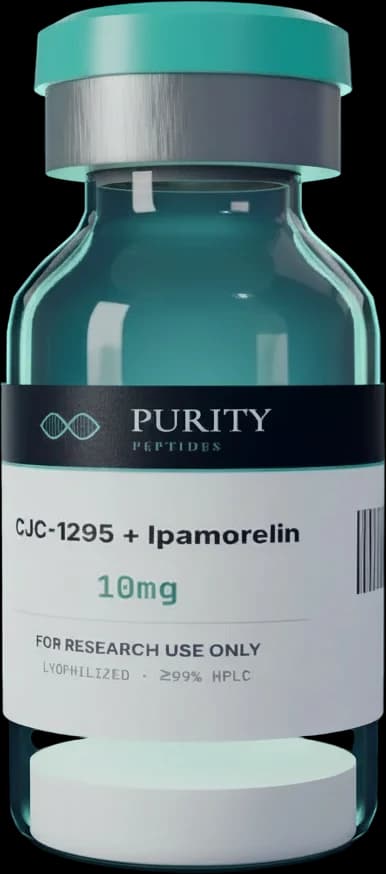
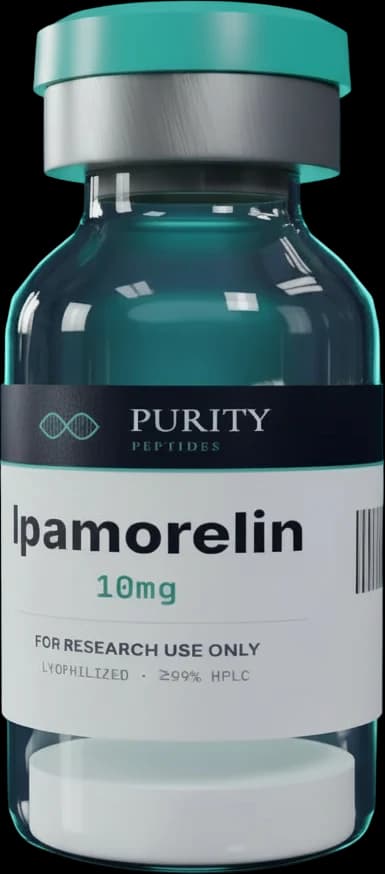
Ipamorelin is a synthetic pentapeptide developed by Novo Nordisk in the 1990s and described in 1998 as the first selective growth hormone secretagogue. Earlier ghrelin-receptor agonists such as GHRP-2 and GHRP-6 released growth hormone but also raised ACTH, cortisol and prolactin; ipamorelin produced GH release of similar magnitude in animal studies without these accompanying hormonal changes.
That selectivity made it a valuable research tool and led to clinical investigation for postoperative ileus, a condition in which ghrelin-receptor activation was expected to improve gut motility. Mid-stage trials did not meet their objectives, and development was discontinued. Rodent studies have also examined effects on bone mass and body composition. Ipamorelin is not approved as a medicine and is prohibited in sport. It is supplied here as a research reference peptide for GH-axis and ghrelin-receptor studies.
Mechanism studied
- Ipamorelin
- GHS-R1a
- Selective GH release
- IGF-1
Ipamorelin activates GHS-R1a, the ghrelin receptor, on pituitary somatotrophs and in the hypothalamus. Through Gq-coupled signalling and increased intracellular calcium, it triggers GH release that follows a pulse-like pattern. Its selectivity is the distinguishing feature: in the original pharmacology studies, even at high exposures ipamorelin did not raise ACTH or cortisol beyond levels seen with GHRH, unlike other GHRPs. Its effects on gastrointestinal motility in animal models are attributed to ghrelin receptors in the enteric nervous system.
Research highlights
- 01Described in 1998 as the first selective ghrelin-receptor GH secretagogue
- 02GH release without significant ACTH, cortisol or prolactin changes in early studies
- 03Clinical trials for postoperative ileus were discontinued after mid-stage results
- 04Rodent studies examined bone mineral and body-composition endpoints
- 05Prohibited in sport under WADA class S2
Research areas
- Selective GH release studies
- GHS-R1a pharmacology
- GI motility models
- Bone & body-composition models
Evidence & regulatory status
Overall status: Not approved — research
Key references
- [1]Raun et al., 1998 — Eur J Endocrinol 139(5):552–561
- [2]PubMed — reviews on ipamorelin
- [3]WADA — Prohibited List of Substances and Methods
Latest published research
51 papers on PubMed →Peptides in urology and sexual medicine: clinical effectiveness, dosing, indications, and safety: a narrative review
Vasylieva V et al. · Sexual medicine reviews · 2026 Sep 30 · PMID 42862021
Peptide Supplements and Their Therapeutic Applications in Sports Medicine
Tewari K et al. · The American journal of sports medicine · 2026 Aug 11 · PMID 42578445
Safety and Efficacy of Approved and Unapproved Peptide Therapies for Musculoskeletal Injuries and Athletic Performance
Mendias CL et al. · Sports medicine (Auckland, N.Z.) · 2026 Aug · PMID 41966639
A new era of doping? Use of peptide and peptide-analog drugs in recreational and professional sport and bodybuilding: a critical review
Coutinho LFD et al. · The Journal of sports medicine and physical fitness · 2026 Jul · PMID 41880199
The emerging landscape of performance-enhancing peptides modulating GH-IGF1 axis: bridging the gap between clinical evidence and patient self-administration
Dominikowski A et al. · Frontiers in endocrinology · 2026 · PMID 42395176
Injectable Peptides in Sports Medicine: A Structured Narrative Review of Evidence, Safety, and Antidoping Implications
Villegas Meza AD et al. · JBJS reviews · 2026 May 1 · PMID 42160466
Therapeutic Peptides in Aesthetic, Metabolic and Endocrine Conditions: Effects, Safety, Clinical Applications, and Future Perspectives
Renke G et al. · International journal of molecular sciences · 2026 Apr 27 · PMID 42123471
Therapeutic peptides in gerontology: mechanisms and applications for healthy aging
Mavrych V et al. · Frontiers in aging · 2026 · PMID 42021992
Live feed from PubMed (NCBI) for “Ipamorelin”, updated 2026-10-30. Listing a paper is not an endorsement of its findings.
Registered studies
3 on ClinicalTrials.gov →- Active not recruiting
Trifecta Research Study
NCT07717866 · Axial Therapeutic Research · 2022-08-01
- CompletedPhase 2
Safety and Efficacy of Ipamorelin for Management of Post-Operative Ileus
NCT00672074 · Helsinn Therapeutics (U.S.), Inc · 2008-04
- CompletedPhase 2
Safety and Efficacy of Ipamorelin Compared to Placebo for the Recovery of Gastrointestinal Function
NCT01280344 · Helsinn Therapeutics (U.S.), Inc · 2011-04
From the public ClinicalTrials.gov registry for “Ipamorelin”, updated 2026-10-30. Shown for research context only; Purity Peptides products are not for human use.
FAQ
In the original pharmacology work, ipamorelin released growth hormone without the rises in ACTH, cortisol and prolactin seen with older GH-releasing peptides. This cleaner hormonal profile makes it a useful tool when researchers want to isolate GH-related effects of ghrelin-receptor activation.
Lyophilized Ipamorelin is normally kept sealed at −20 °C, protected from light and moisture. Once reconstituted for laboratory work, aliquots are held at 2–8 °C for short-term use or frozen, avoiding repeated freeze–thaw. Follow the lot-specific guidance on the certificate of analysis.
Every lot of Ipamorelin ships with a certificate of analysis reporting HPLC purity, mass-spectrometry identity against the expected molecular weight, appearance and lot number. Match the COA lot to the vial label and keep it with your experimental records.
Last updated October 2026 · Reviewed by the Purity Peptides research team · Information is a summary of published literature and is not a recommendation for any use.