Overview
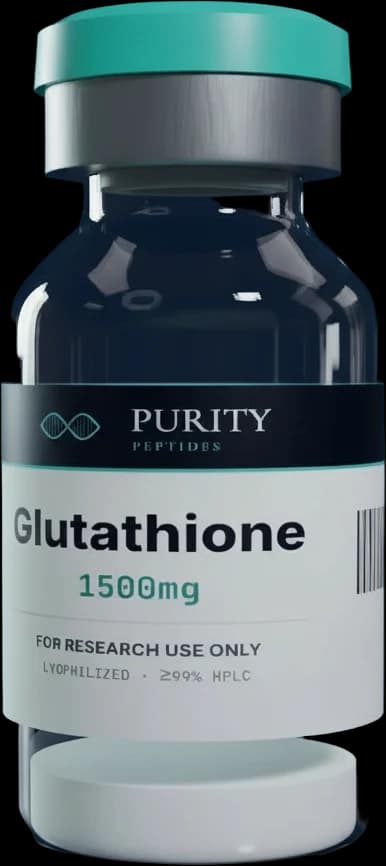
Glutathione is a tripeptide of glutamate, cysteine and glycine in which the glutamate is linked through its side-chain γ-carboxyl group, a bond that protects it from most peptidases. It is present at millimolar concentrations inside nearly every mammalian cell and is the most abundant low-molecular-weight thiol in the body.
Because its cysteine thiol readily donates electrons, glutathione sits at the centre of cellular redox biology. The ratio of reduced (GSH) to oxidised (GSSG) glutathione is widely used as an index of oxidative stress in research. Glutathione also conjugates drugs and toxins for elimination and regenerates other antioxidants such as vitamins C and E. Studies continue to examine how its levels change with age and disease and how well oral or liposomal forms raise tissue concentrations. Our reduced glutathione is supplied as a research reagent for redox and cell-biology studies.
Mechanism studied
- Glutathione
- GPx & GST enzymes
- ROS neutralisation
- Redox homeostasis
Glutathione is synthesised in two ATP-dependent steps by glutamate-cysteine ligase and glutathione synthetase. Its thiol group reduces hydrogen peroxide and lipid peroxides through glutathione peroxidases, forming GSSG, which glutathione reductase recycles using NADPH. Glutathione S-transferases conjugate GSH to electrophilic compounds, marking them for export. It also modulates protein function through reversible S-glutathionylation of cysteine residues, a regulatory modification studied in signalling, apoptosis and mitochondrial function, linking cellular redox state to protein activity.
Research highlights
- 01Present at millimolar levels in most cells; the main intracellular thiol
- 02GSH:GSSG ratio is a standard research marker of oxidative stress
- 03Substrate for glutathione peroxidases and glutathione S-transferases
- 04Regulates proteins through reversible S-glutathionylation
- 05Oral bioavailability studied in randomised trials with mixed findings
Research areas
- Cellular redox balance
- Oxidative stress models
- Xenobiotic conjugation (GST)
- Cell culture supplementation
Evidence & regulatory status
Overall status: Not approved as a drug — research reagent
Key references
- [1]Forman, Zhang & Rinna, 2009 — Mol Aspects Med 30(1-2):1–12
- [2]Richie et al., 2015 — Eur J Nutr 54(2):251–263
Latest published research
199,418 papers on PubMed →Reassigning an amber codon to selenocysteine using a functional cysteine suppression pair in Escherichia coli
Niu S et al. · Synthetic and systems biotechnology · 2027 Mar · PMID 42569311
An endoplasmic reticulum-enriched nanogel couples ferroptotic tumor damage with macrophage reprogramming for triple-negative breast cancer immunotherapy
Chen H et al. · Bioactive materials · 2027 Feb · PMID 42787620
A transferrin receptor-targeted liposome for iron metabolism regulation-augmented photodynamic therapy in glioblastoma
Wen R et al. · Bioactive materials · 2027 Feb · PMID 42780992
Colorimetric sensor array based on pH-modulated inhibitory effect of a single nanozyme'activity for antioxidant recognition
Feng X et al. · Talanta · 2027 Feb 1 · PMID 42762755
Polyphenol-engineered selenium nanocatalysts enable neuroprotective glioblastoma chemoimmunotherapy via nose-to-brain delivery
Hong S et al. · Biomaterials · 2027 Feb · PMID 42669245
Synergistic effects of irregular PET microplastics and cadmium on cucumber seedlings revealed by LA-ICP-MS imaging
Wang XS et al. · Talanta · 2027 Feb 1 · PMID 42664648
"Gyroscope"-type portable device based on a bimetallic Fe/Zn-ZIF8 MOF nanozyme@agarose hydrogel with deep learning for monitoring Hg pollution
Ma W et al. · Talanta · 2027 Feb 1 · PMID 42636660
A flexible hydrogel-based SERS sensor for multi-target detection of microbial metabolites in deep-sea environments
Zhao T et al. · Talanta · 2027 Feb 1 · PMID 42585827
Live feed from PubMed (NCBI) for “Glutathione”, updated 2026-10-30. Listing a paper is not an endorsement of its findings.
Registered studies
312 on ClinicalTrials.gov →- Completed
TURMERIC EXTRACT AND OXIDATIVE STRESS IN MUAYTHAI ATHLETES AND SEDENTARY MEN
NCT07904598 · Sinan Ağlar · 2025-01-15
- Not yet recruitingPhase 2
FEAST and HOPE: Redox PSC Pilot Study
NCT07898839 · Brigham and Women's Hospital · 2027-01
- Not yet recruiting
Weight Gain in Pediatric Leukemia Survivors
NCT07374315 · Washington University School of Medicine · 2026-11-30
- CompletedPhase 3
The Combined Effect of N-Acetyl Cysteine and Metformin in Polycystic Ovary Syndrome Patients
NCT06836128 · Cairo University · 2025-03-01
- Not yet recruiting
The Effect of Light Therapy on Cellular Energy and Oxidative Stress in Healthy Adults and Type 1 Diabetic Patients
NCT07833865 · University of Thi-Qar · 2026-10-13
- RecruitingPhase 2
Prevent Cardiac Surgery Associated AKI Trial
NCT06620523 · George Washington University · 2024-07-18
- Temporarily not available
Expanded Access Protocol for SPI-1005
NCT07873281 · Sound Pharmaceuticals, Incorporated
- Completed
The Impact of Qualia Gluthathione+ on Blood Glutathione Levels
NCT07221955 · Qualia Life Sciences · 2025-11-30
From the public ClinicalTrials.gov registry for “Glutathione”, updated 2026-10-30. Shown for research context only; Purity Peptides products are not for human use.
FAQ
Yes. Reduced glutathione gradually oxidises to GSSG on exposure to air, moisture and neutral or alkaline pH. Keep vials tightly sealed and cold, prepare solutions fresh, and consider degassed or slightly acidic buffers when reduced-form integrity matters for your assay.
Lyophilized Glutathione is normally kept sealed at −20 °C, protected from light and moisture. Once reconstituted for laboratory work, aliquots are held at 2–8 °C for short-term use or frozen, avoiding repeated freeze–thaw. Follow the lot-specific guidance on the certificate of analysis.
Every lot of Glutathione ships with a certificate of analysis reporting HPLC purity, mass-spectrometry identity against the expected molecular weight, appearance and lot number. Match the COA lot to the vial label and keep it with your experimental records.
Last updated October 2026 · Reviewed by the Purity Peptides research team · Information is a summary of published literature and is not a recommendation for any use.